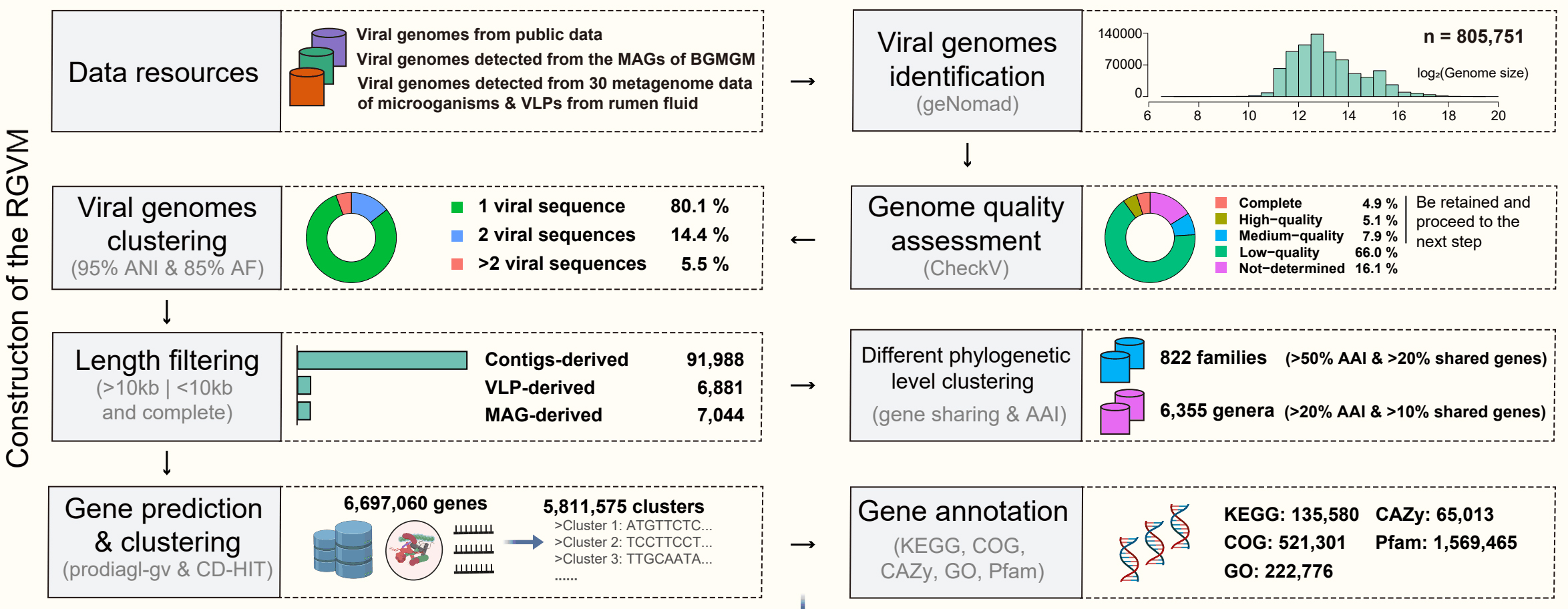

The rumen is a multi-kingdom ecosystem comprising bacteria, archaea, fungi, protozoa, and viruses. Its microbiota digest and ferment otherwise indigestible feed, providing the host with most of its energy and metabolic nitrogen for growth and production. While associations of rumen bacteria, archaea, and protozoa with feed efficiency, methane emissions, and animal health have been extensively studied, the diversity of the abundant rumen virosphere remains a "dark matter." This knowledge gap is compounded by the inherent complexity of the rumen ecosystem, which is influenced by diverse diets, host ages, animal breeds, and intestinal segments.
Viruses occupy a unique and critical niche within the ruminant gastrointestinal ecosystem. Despite being the most abundant biological entities on earth and key drivers of prokaryotic evolution, they remain relatively underexplored. In the rumen, viruses shape the microbial landscape through lytic and lysogenic cycles, altering elemental stoichiometry, reprogramming host biochemical pathways, and enabling targeted microbial editing. Understanding the distribution and functional potential of rumen viral proteins is thus crucial for deciphering and manipulating this complex ecosystem.
We compiled a global collection of ruminant gastrointestinal metagenomic and viromic sequencing data, including metagenome-assembled genomes (MAGs), from samples representing diverse intestinal segments, breeds, and diets. Employing an advanced viromics analysis pipeline, we constructed the Ruminant Gastrointestinal Virus Map (RGVM), the most extensive resource of its kind to date. This compendium will be continuously updated with new sequencing data.